Optimizing Closed-Approach Preservation Rhinoplasty by Ultrasonic Piezo-assisted Techniques for Enhanced Precision
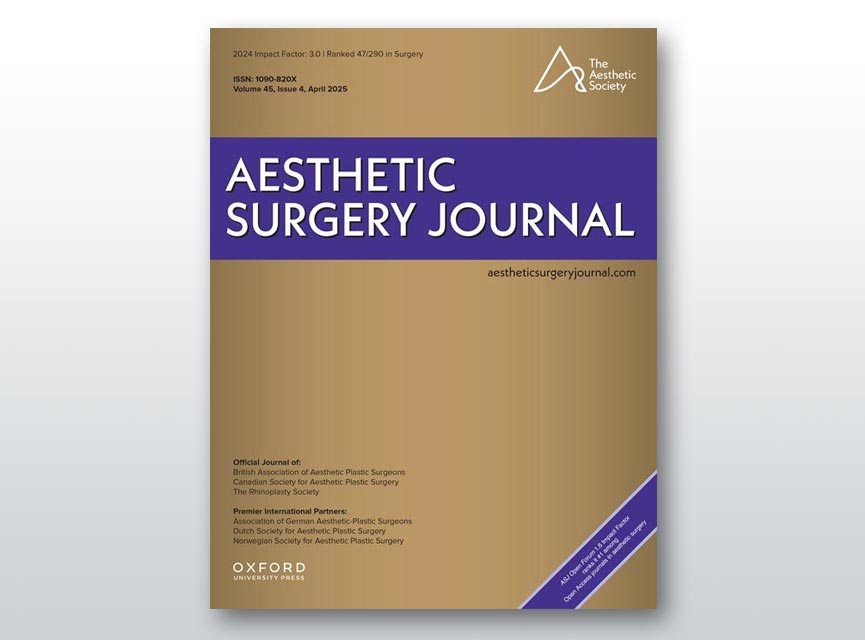
Aesthetic Surgery Journal
Vol. 45(4) | April 2025
Authors: Ruben Guilarte1, Gerardo Malzone2
DOI: https://doi.org/10.1093/asj/sjaf006
Preservation rhinoplasty, especially dorsal preservation, has gained great relevance thanks to the incorporation of piezoelectric devices, which reduce tissue trauma and improve the accuracy of bone sculpting. However, this approach poses specific technical challenges, mainly in closed approaches, where the limited operative space makes conventional piezotomes difficult to handle.
Abstract
The main aim of this study was to analyze the clinical outcomes of preservation rhinoplasty assisted by ultrasonic technology, using specific instruments designed to increase visibility, provide millimetric precision and speed up recovery in closed procedures. Between May 2021 and April 2023, a cohort of 734 patients undergoing primary rhinoplasty was studied, rigorously documenting the adaptation of the instruments, the finesse of bone remodeling and the reduction of postoperative morbidity. The data showed a revision rate of 6%, mainly for minor refinements of the dorsal contour, together with minimal intraoperative bleeding, little swelling and very mild postoperative discomfort, which confirms the high efficiency of specialized inserts, such as the Woodpecker (Guilin, China) SS18 and SS4 models, for optimizing the cut in the perpendicular plate of the ethmoid and in transverse and lateral osteotomies.
Conclusion
The integration of piezoelectric technology in rhinoplasty significantly enhances surgical precision and minimizes tissue damage, consolidating and supporting the benefits of advanced closed-approach preservation techniques. Although it is currently technically feasible to perform all osteotomies with ultrasonic piezotomes, further refinement of instrument design will allow procedures to be refined even more, enabling increasingly less invasive interventions and ensuring superior aesthetic and functional standards.
Access the full article
The journal Aesthetic Surgery Journal
The following article belongs to the journal Aesthetic Surgery Journal, better known by its acronym: ASJ. It is an international, peer-reviewed publication that focuses on the study, innovation and analysis of scientific advances in the field of plastic and aesthetic surgery. It is the official publication of The Aesthetic Society, as well as the English-language organ of expression of numerous international societies of plastic, aesthetic and reconstructive surgery in Europe, Asia and Latin America. These include the official journal of The Rhinoplasty Society, the British Association of Aesthetic Plastic Surgeons (BAAPS), the Italian Association of Aesthetic Plastic Surgery and the Canadian Society for Aesthetic Plastic Surgery.
ASJ is indexed in MEDLINE/PubMed and included in Clarivate’s Journal Citation Reports. Its current impact factor stands at 3.9, which catapults it to first place worldwide (number 1) among all journals devoted to aesthetic and plastic surgery, establishing it as an absolute reference in the global surgical field.[Accurate data as of the exact moment this post was written.]